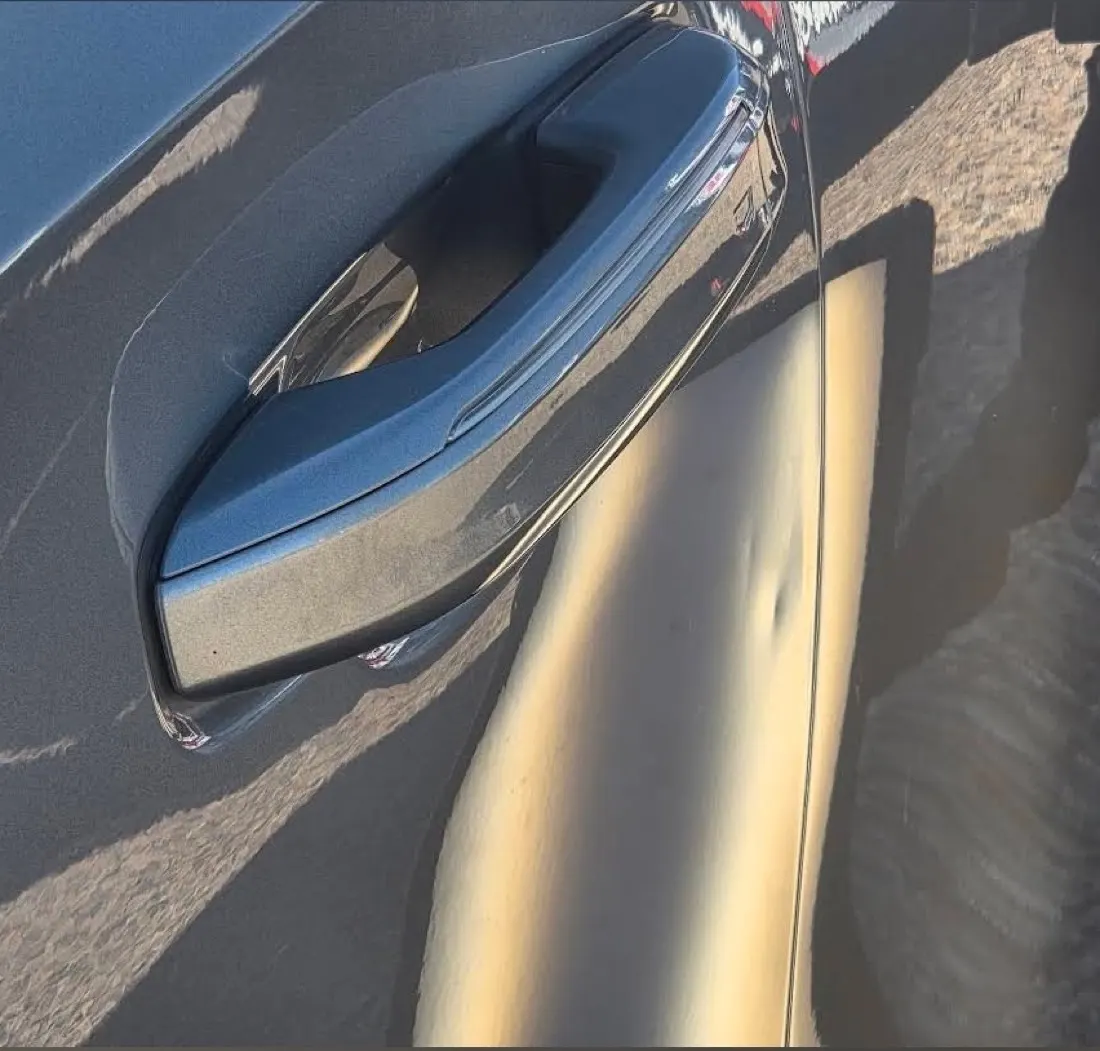
How to Get a Dent Out of a Car Door: The Truth About DIY
Here is the answer most articles will not give you: there is no reliable way to get a dent out of a car door yourself. Boiling water, hair dryers, compressed air, plungers, none of it works on a metal body panel. The one narrow exception is a plastic bumper, where hot water can sometimes flex a dent back, and that is as far as DIY goes. Metal holds its shape until it is reshaped with controlled pressure from behind the panel, read under specialized light, a skill that takes a technician the better part of a year to do consistently on even a simple door ding without leaving a trace. A failed attempt adds high spots and can crack the paint, and at that point the dent that qualified for paintless dent repair now needs a body-shop repaint.
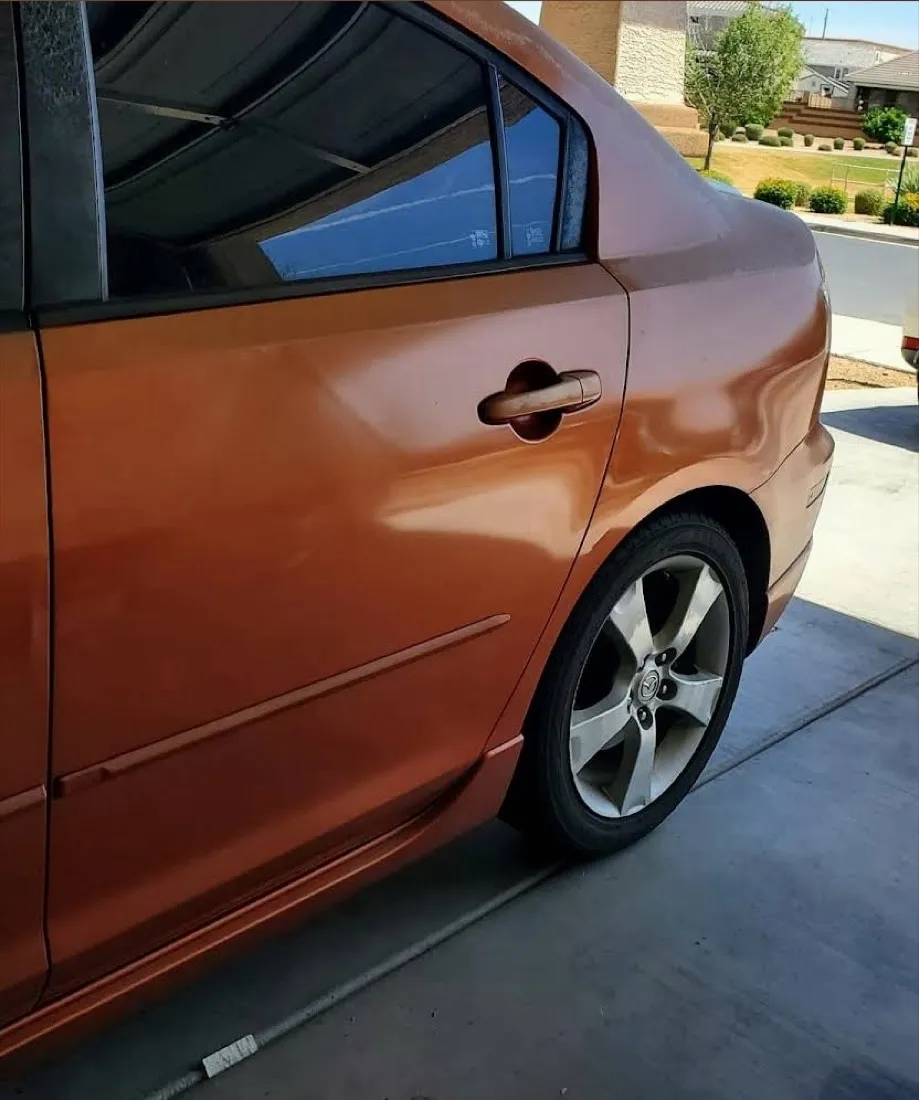
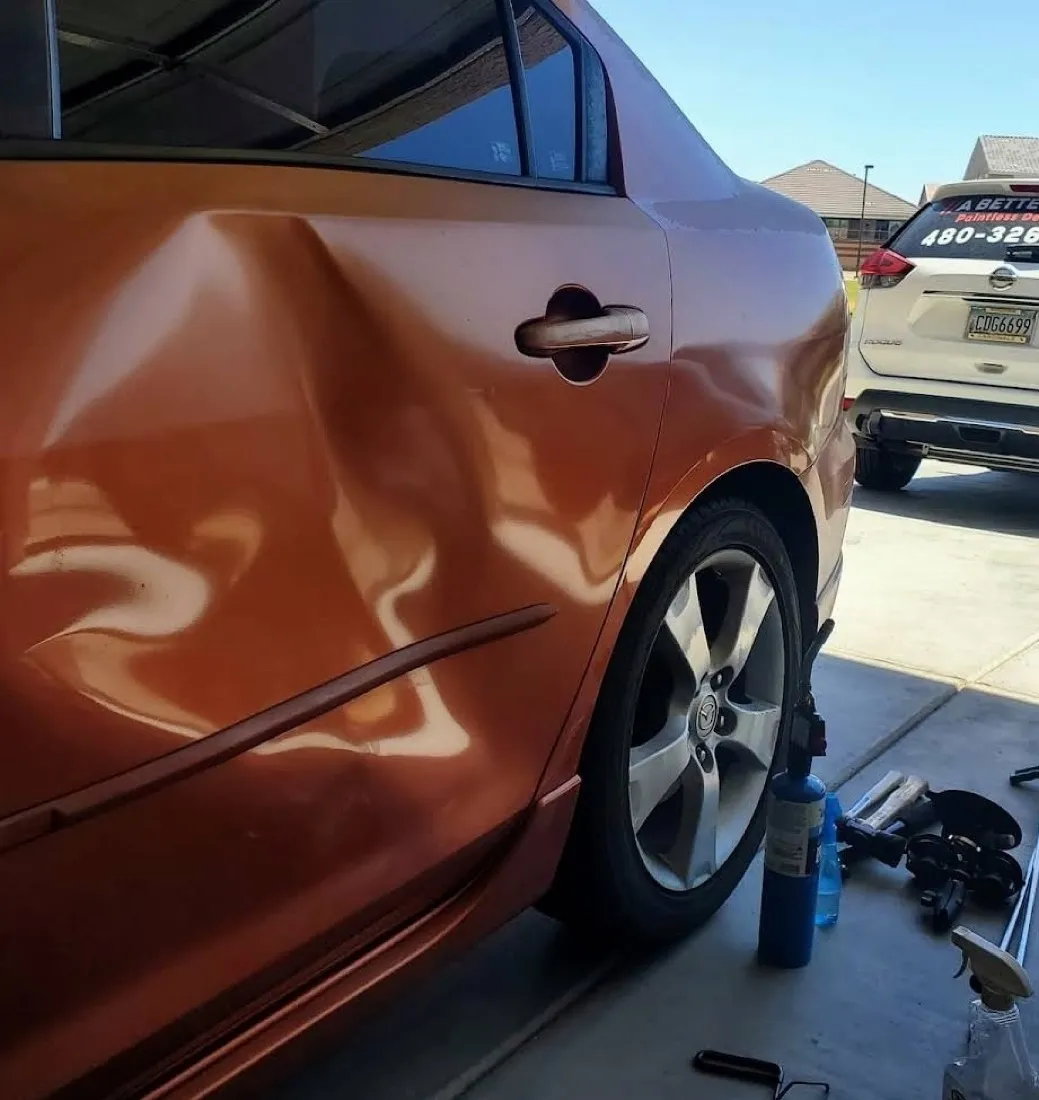 Before After
 Why the Internet’s DIY Dent Tricks Don’t Work
The boiling water trick, the hair dryer and compressed air trick, the plunger, they make great videos, but they rely on an idea that simply is not true of automotive sheet metal: that heat or suction can persuade a panel back into shape. Steel and aluminum body panels do not flex back. A dent is metal that has been moved, and it stays moved until someone moves it back, precisely, gradually, from behind the panel, with the right tool on the right spot.
The one honest exception: a plastic bumper cover. Plastic has flex memory, so hot water can occasionally relax a pushed-in bumper back toward its shape. That is the full extent of what DIY can legitimately do, and it has nothing to do with the metal door, fender, hood, or quarter panel your dent is probably on.
You Wouldn’t Borrow a Surgeon’s Scalpel
Paintless dent repair is closer to surgery than to bodywork. You would not ask a surgeon to hand over the scalpel so you could save some money on your own nose, not because the surgeon wants to protect a fee, but because the skill is the entire procedure. PDR is the same. The tool is just a steel rod; the repair is in the hands that have spent years learning to read metal under a light board and move it a few thousandths of an inch at a time.
Here is the part most people never hear: it takes a technician the better part of a full year of training to remove a simple door ding consistently without leaving a trace. Not a crease. Not hail. A basic ding. That is how precise the work is, and why no kit, video, or household trick can shortcut it.
What a Failed DIY Attempt Actually Costs
This is the real reason to leave the dent alone. Pushing, pulling, heating, or prying a metal panel without training does not leave it the same, it adds high spots, stretches the metal, and can crack the factory paint. Every one of those makes the original repair harder, and some make it impossible.
And if the panel can no longer be repaired with PDR, your only remaining option is the body shop: sanding, filler, and a repaint that permanently replaces your factory finish. So the attempt to save a couple hundred dollars can turn a $175 to $800+ repair into a four-figure repaint, and cost you the original paint forever. If you truly wanted the dent fixed, the attempt itself is what takes that option away.
If It’s a Beater, Go Ahead, Honestly
If the car is a beater and you are curious, try it. Nothing here is about protecting a secret. Just go in with accurate expectations: at best, the dent will look different, not gone. But if the vehicle matters to you, its finish, its history, its value, do not experiment on it. There is no version of the boiling-water trick that ends with a panel you cannot tell was ever dented.
What Removing a Dent Properly Actually Takes
A professional repair starts behind the panel, not in front of it. The technician gains access to the back of the dent, through the door’s internal structure, sometimes removing trim or hardware to reach it, then works the metal back to its factory contour under a reflection board that exposes every thousandth-of-an-inch of movement. The factory paint is never touched. Done right, there is no trace the dent ever existed: no filler, no repaint, no Carfax record.
That is what you are actually paying for, and it is more affordable than most people guess. Across Mesa, Gilbert, Chandler, and Tempe, a typical door ding runs $175 to $800+, with deeper or crease-type damage from $600 to $1,500+. Send a photo to get a real estimate in minutes, or see the full PDR cost guide. One visit, and the dent never happened.
Frequently Asked Questions
- No, not on a metal panel. Boiling water can occasionally flex a dent out of a plastic bumper cover, because plastic has flex memory. Steel and aluminum body panels do not. A dent in a metal door stays until the metal is professionally reshaped from behind the panel.
- No. The hot-cold trick relies on the panel "popping" back, which automotive sheet metal does not do. At best nothing happens; at worst the thermal shock or the prying that follows damages the paint and turns a repairable dent into one that needs a repaint.
- Because the skill is the repair. A technician trains for the better part of a year to remove even a simple door ding consistently without a trace, reading the metal under a light board and moving it fractions of a millimeter at a time from behind the panel. No kit or trick replicates that.
- High spots, stretched metal, and cracked paint are the common outcomes, and they can make the dent unrepairable with PDR. At that point the only fix left is a body-shop repaint, which costs far more and permanently replaces your factory finish.
- Most door dings run $175 to $800+ across Mesa and the East Valley, with deeper or crease-type damage from $600 to $1,500+. Send a photo and you will have an exact, transparent number in minutes, usually less than the cost of the tools a DIY attempt requires.
Get a real estimate for your dent
Send a photo and Jerod replies with an honest, transparent price, usually within minutes. Serving Mesa & Greater Phoenix.
See It Done for Real
Reading about PDR is one thing. Watching a dent disappear without touching the paint is another. Tap a clip.
More from the shop


 PK, your repair concierge